

Art insurance renews every year. The values it renews on are often years old.
Those values come in one of two forms. In a scheduled policy, meaning one that lists the works, each work has its own insured value. In a blanket policy, meaning one with no list, a single limit covers the whole collection. Either way, the figure usually comes from an appraisal or an estimate that nobody has looked at since. If the market has moved, the policy may no longer cover what the collection would cost to replace.
What collectors are told to do
Chubb advises collectors to reappraise every three to five years. PURE may require a new appraisal once a work's last one is more than three to five years old. Neither insurer requires an appraisal for fine art valued under $250,000. A description and the owner's estimate are enough. Many collectors take that advice at face value. They renew each year, pay the bill and assume the file is in order.
Some policies add a cushion for works that rise in value. Chubb pays up to 150% of a work's scheduled value if the market has gone up before a loss, subject to the policy's terms. PURE offers a similar extension, and so does Private Client Select, each with its own limits. For a painting scheduled at $200,000, the policy can pay up to $300,000. If the painting would now cost $280,000 to replace, the extension covers it. If it would cost $400,000, the owner is $100,000 short.
Why appraise when the insurer doesn't require it
The $250,000 threshold is for underwriting. What you are paid after a loss depends on whether each work is scheduled or under a blanket limit.
On a scheduled policy, the value was agreed before anything happened. After a total loss, that is the number you are paid, even if the work is now worth far more. If the number is your own estimate of what you paid years ago, that estimate becomes the settlement.
On a blanket policy, nothing was agreed. After the loss you have to prove what each work was worth, with the work gone, and the insurer will check your figure against its own. An appraisal made before the fire is the strongest evidence you can bring. Some blanket policies also cap what they pay for any single work, and some reduce every claim when the collection is worth more than the limit. Your broker can tell you whether yours does either.
Recent appraisals can also lower the premium. PURE's guidelines offer a 20% discount on a class of items when 80% of that class has been appraised within the last two years. Over a few renewals, that can cover part of what the appraisals cost.
Where that advice breaks down
The cushion applies only to works listed one by one. Chubb applies it to itemized coverage, so a blanket limit has nothing above it unless the policy says otherwise. If you have blanket coverage, ask your broker what, if anything, takes its place. In Cove's experience, most collectors with blanket coverage don't know the cushion exists for scheduled works.
The cushion also stops at 50%. A work that has doubled in value since its last appraisal is paid at one and a half times its scheduled value, and the owner covers the rest. With three to five years between appraisals, and no appraisal at all below $250,000, many works go years without anyone checking the figure.
What a fire does to an old appraisal
Take a collector insured for $3 million. Her most valuable works were appraised in 2020 and are listed on the policy at $2 million together. The rest were never appraised and share a single $1 million limit, set from her own estimate. Each year her broker renews the policy on the same figures and tells her to wait for the next appraisal, and she does.
In 2025 a wildfire burns the house down with everything in it. The collection insured for $3 million is now worth $6 million, and the claim is where she learns what that means.
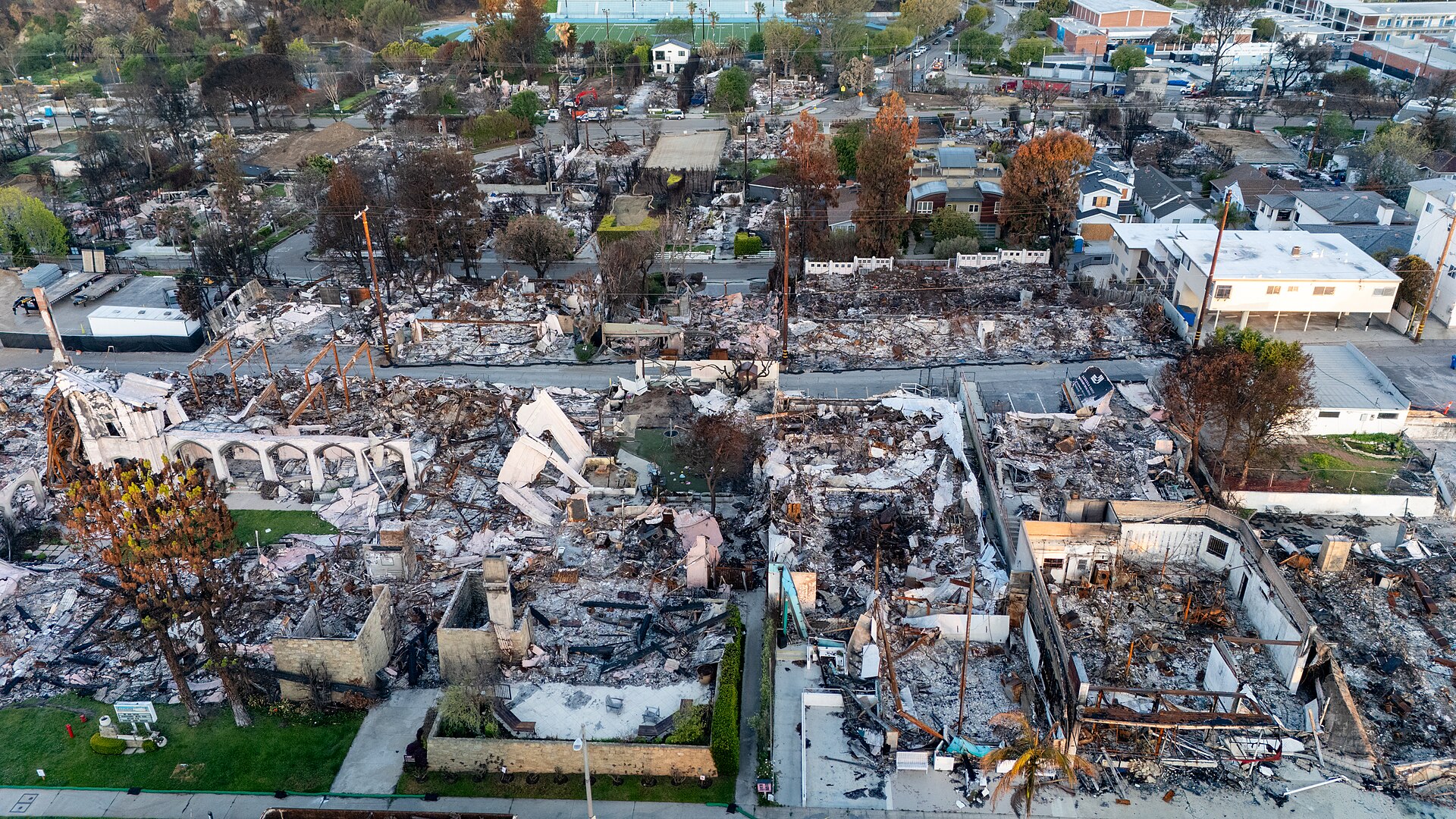
Her listed works are now worth $4 million, but the 150% extension stops at $3 million. Her unlisted works are worth $2 million, and the blanket limit pays at most $1 million, once she proves what they were worth. She did everything she was told, and she is $2 million short. Cove has heard versions of this from people who lost homes in the January 2025 Los Angeles fires.
Keeping values current between appraisals
If you reappraise on a five-year cycle, your insured values go unchecked for four years out of five. Reappraising everything every year is expensive. The middle path is to watch the values all the time and reappraise only the works that have moved.
That is what Cove does. Cove's team photographs, researches and catalogues every work. Cove then compares each work with recent sales of similar works and tells the owner when one has gone up in value. When a work needs a new appraisal, Cove arranges one for that work alone, from an appraiser who follows USPAP, the standards insurers and the IRS expect an appraisal to meet. The new value can then go to the broker before renewal.
Before your next renewal
- Ask your broker: "Is my art scheduled, meaning each work has its own listed value, or blanket, meaning one limit for the whole collection? Show me where the policy says so, and what the limit is."
- Ask your broker: "Does my policy pay above the scheduled value if the market rises? Point me to the wording for any 150% market value extension, or similar, and tell me whether it applies to scheduled works only."
- If any of your art is under a blanket limit, ask your broker: "Is there a cap per item, and does the policy reduce claims when the collection is worth more than the limit?"
- Find the appraisal date behind each of your most valuable works. The date is on the appraisal report itself, and your broker can send a copy if you don't have one.
- Ask your broker which works require formal appraisals, when each was last appraised, and whether any scheduled values should be updated before renewal.
- Ask whether works appraised in the last two years would earn a premium discount, and how much it would be.
- Decide who watches the collection between appraisals.